TV-14, PG-13, and the Rest: The Secret Language Networks Use to Tell You What to Watch
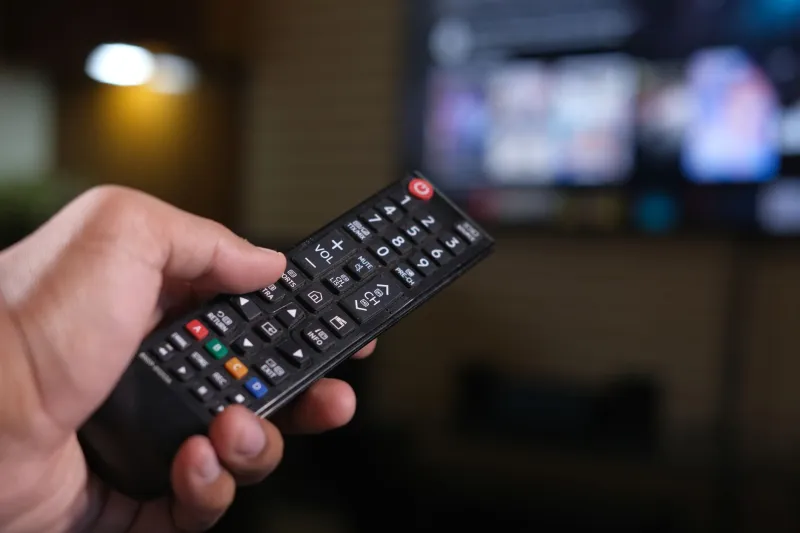
Before you press play on anything tonight, something small and cryptic has already decided whether you're allowed to be there. It sits in the corner of the screen — maybe a box, maybe a badge, sometimes just a cluster of letters that flickers for a few seconds before vanishing. TV-14. PG-13. TV-MA. R. A lowercase 'd' tucked after a hyphen like a footnote nobody asked for.
You've been reading these codes your whole life. But reading and understanding are two very different things.
At LETT206, we've spent a lot of time thinking about the signals embedded in entertainment — the ones hiding in plain sight. And the rating system might be the most brazen example of all. It's a shorthand language built by committees, shaped by lobbyists, and quietly engineered to do two completely opposite things at once: protect audiences and sell content to them.
Let's decode it.
Where the Alphabet Soup Actually Comes From
The MPAA film rating system — the one responsible for G, PG, PG-13, R, and NC-17 — didn't appear out of thin air. It launched in 1968 as a direct response to the collapse of the old Hollywood Production Code, a much more heavy-handed set of content rules that studios had followed since the 1930s. When that system finally crumbled under the weight of films like Bonnie and Clyde and The Graduate, the industry needed a new framework fast.
What they landed on was deliberately vague. Letters instead of descriptions. Suggestions instead of mandates. The MPAA wasn't telling you what was in the movie — it was telling you roughly who the movie was for. That distinction matters more than it sounds.
Television followed a different path. The TV Parental Guidelines system didn't roll out until 1997, pushed along by the Telecommunications Act of 1996 and the looming threat of government regulation if broadcasters didn't self-police. The result was a grid of ratings — TV-Y, TV-Y7, TV-G, TV-PG, TV-14, TV-MA — plus a set of content descriptors that got bolted on afterward: V for violence, S for sexual content, L for language, D for suggestive dialogue, FV for fantasy violence.
FV. Fantasy violence. As in, the letters are now doing enough work that they need their own subgenres.
The Hidden Marketing Angle Nobody Talks About
Here's where it gets interesting. These systems were sold to the public as protective tools — a way for parents to make informed decisions, a guardrail between kids and content that wasn't meant for them. And they do serve that function, at least in theory.
But ratings are also, quietly and consistently, a marketing mechanism.
Studies have shown for decades that certain ratings actively drive younger audiences toward content. The phenomenon even has a name: the forbidden fruit effect. Slap a PG-13 on something and suddenly the 11-year-olds in the room are far more interested than they were five minutes ago. The R rating carries a kind of cultural cachet that G and PG simply don't — it signals that a film is serious, edgy, adult. Worth sneaking into.
Filmmakers know this. Studios know this. There's a reason directors sometimes fight to keep an R rating even when a few cuts could earn them a PG-13 and a wider theatrical release. The letter itself carries meaning that transcends its official definition.
On the flip side, a G rating in 2024 is practically a box office liability for anything targeting adults. The letter has become so associated with children's content that studios will sometimes push for PG on family films just to avoid the perception of being too safe.
The code isn't just describing the content. It's shaping how people feel about it before they've seen a single frame.
What Those Little Descriptor Letters Are Really Saying
If the main rating is the headline, the content descriptors are the fine print — and they're worth slowing down to read.
That lowercase 'd' after TV-14? It stands for suggestive dialogue. Not explicit content. Not graphic anything. Just suggestive dialogue — which is a fascinatingly polite way of saying the characters are flirting in ways that might raise eyebrows. The fact that there's an official broadcast code for this, represented by a single letter, tells you something about how granular (and sometimes absurd) this system gets.
The 'FV' descriptor for fantasy violence exists specifically to distinguish cartoon-style or supernatural violence from realistic depictions — a distinction that matters for child development research but reads, on screen, like the ratings board got extremely specific about the difference between a lightsaber duel and a fistfight.
And then there's NC-17 — the rating that replaced X in 1990 and was specifically designed to shed the X rating's association with pornography. The idea was that serious, adult films with non-explicit but mature content deserved a legitimate rating rather than being lumped in with adult films. In practice, NC-17 became its own kind of scarlet letter. Many theater chains won't carry NC-17 films. Major newspapers historically refused to advertise them. The rating meant to legitimize adult cinema instead created a new tier of stigma.
One letter. Enormous consequences.
Streaming Scrambled Everything
The traditional rating system was built for a world of movie theaters and broadcast television. Streaming broke the architecture in ways that are still being patched.
Netflix, Hulu, HBO Max, and the rest have adopted the TV ratings framework for their content — but they've also layered their own descriptors on top of it. Log onto Netflix right now and you'll find tags like "mild violence," "suggestive scenes," "drug use," and "disturbing imagery" sitting alongside the official TV ratings. These platforms aren't just translating the existing code; they're building parallel languages.
The result is a viewer experience where you might see TV-MA followed by three or four plain-English content warnings — which raises an obvious question. If you're already explaining it in words, what's the letter doing there?
The answer is probably legacy. The letter ratings carry legal and institutional weight that plain-language descriptions don't. They're baked into parental control systems, content filters, and regulatory frameworks. Dropping them entirely would create more problems than it would solve.
So instead, we get both. The cryptic shorthand and the explanation. The signal and the translation running side by side.
Reading Between the Letters
What the rating system ultimately reveals — once you start looking at it the way we look at things here — is that entertainment has always communicated on multiple frequencies simultaneously. There's the content itself, and then there's the metadata wrapped around the content, shaping your expectations before the story even begins.
A two-letter code does an enormous amount of cultural work. It signals age-appropriateness, genre expectations, perceived seriousness, and marketing positioning all at once. It's a compressed file carrying more information than its size suggests.
Which, honestly, feels pretty on-brand for an industry that's been encoding its signals since before most of us were born.
Next time you see that little box flicker in the corner of your screen, give it a second look. It's not just a warning label. It's a transmission — and now you know how to read it.